
AI practice
AI that leaves the pilot stage and earns its keep.
We design vector search on the database you already run, build retrieval-augmented assistants and agentic workflows, ship GenAI features into your products, and put evaluation, guardrails and cost controls around all of it.
- Services
- 6
- Engagements
- Fixed scope, fixed fee
- Who does the work
- Senior engineers
Vector search, RAG, AI agents, GenAI apps, LLMOps and automation on your own data.
All platforms pgvector
 Pinecone
 Weaviate
 Milvus
 Qdrant
 Bedrock
 Azure OpenAI
 Vertex AI
 Anthropic
 OpenAI
 LangGraph
 LangChain
 LlamaIndex
 Langfuse
 Ragas
 MLflow
 MCP
 n8n
Point of view
Most AI pilots stall on data, evaluation and cost, not on the model. We start from the data you already hold, measure answers before launch, and put guardrails and budgets around every call.
6 services, each with a fixed-fee entry point.
Vector search, RAG, AI agents, GenAI apps, LLMOps and automation on your own data. Each is scoped after a free 30-minute review, and the assessment fee is credited to the project.
01 / 06
Vector Databases & Semantic Search
The right vector store is often the database you already run. We help you choose between pgvector, MongoDB Atlas Vector Search, Redis, Oracle AI Vector Search and dedicated engines like Pinecone, Weaviate and Milvus, then build search that is measurably relevant.
Sound familiar?
- Every vendor says their vector database is the answer and you need a neutral comparison.
- Search results look plausible in a demo and wrong in production.
- You already run PostgreSQL, MongoDB, Redis or Oracle and would rather not add another database to operate.
You receive
- Engine comparison on your data
- Ingestion and indexing pipeline
- Hybrid search API
Vector Databases & Search Starts with: Vector search design review
02 / 06
RAG & Enterprise Knowledge Assistants
A knowledge assistant is only useful if it answers from your sources, shows where the answer came from and respects who is allowed to see what. We build RAG systems that pass those tests, and measure them before your users do.
Sound familiar?
- A chatbot pilot impressed in the demo, then gave confident wrong answers.
- Content lives in SharePoint, Confluence, tickets, PDFs and databases, with different permissions everywhere.
- Security will not approve anything that might show a document to the wrong person.
You receive
- Architecture and evaluation plan
- Working assistant with citations
- Permission-aware retrieval
RAG & Knowledge Assistants Starts with: RAG readiness assessment
03 / 06
AI Agents & Agentic Workflows
Agents that take actions need more engineering than chatbots: permissions, approvals, logging and a way to stop. We build agentic workflows narrow enough to trust, measured against a clear business outcome.
Sound familiar?
- Leadership wants 'agents' and the team needs a use case that will survive contact with production.
- A prototype works in a notebook but nobody knows how to give it safe access to real systems.
- Risk and compliance need to know what the agent did, why, and who approved it.
You receive
- Prioritized use-case shortlist
- Agent and tool design
- Working prototype on sample data
AI Agents & Agentic Workflows Starts with: Agent design sprint
04 / 06
Generative AI Application Development
We add generative AI where it removes real work: drafting, summarizing, extracting data from documents, answering questions inside your product. Built as normal software, with tests, monitoring and a budget.
Sound familiar?
- Customers or staff expect AI features and the roadmap has a placeholder where the plan should be.
- Document-heavy processes such as claims, invoices or contracts still rely on manual reading and typing.
- A prototype exists but it has no tests, no monitoring and no cost ceiling.
You receive
- Scoped use case with success metrics
- Production-ready feature or service
- Evaluation suite
GenAI App Development Starts with: GenAI feature scoping
05 / 06
LLMOps, Evaluation & AI Guardrails
Most GenAI pilots stall between demo and production because nobody can prove they are accurate, safe and affordable. We add the evaluation, guardrails, monitoring and cost controls that let you ship, and keep shipping.
Sound familiar?
- A GenAI pilot works, but security, legal or the business will not sign off on production.
- Every prompt or model change is a gamble because there is no regression test.
- You cannot see what the model was asked, what it answered or what it cost.
You receive
- Readiness gap report
- Evaluation suite running in CI
- Guardrail configuration
LLMOps, Evaluation & Guardrails Starts with: LLM production readiness review
06 / 06
Intelligent Automation
Not every problem needs an agent. Many need a reliable workflow with AI at one or two steps: reading a document, routing a request, drafting a reply. We automate the repetitive work around your data and cloud, with people in control.
Sound familiar?
- Skilled people spend hours a week copying data between systems.
- Requests arrive by email and are routed by hand.
- Operations runbooks are followed manually at 2 a.m.
You receive
- Process inventory with scores
- Automated workflows in production
- Monitoring and exception handling
Intelligent Automation Starts with: Automation discovery
What is driving demand right now
Backed by public sources.
Pilot to production
GenAI pilots that stalled
Gartner expects over 40% of agentic AI projects to be canceled by the end of 2027 on cost, value or risk. Production needs evaluation, guardrails and cost control.
Budget shift
AI budgets growing fast
Gartner forecasts worldwide AI spending to grow 49.5% in 2026. Boards now expect production systems with measurable results, not more demos.
RAG & Knowledge Assistants Source: Gartner
How we deliver AI & Automation work
The same five phases on every engagement in this practice, so you always know what happens next and what you hold at the end of each phase.
- 01
Frame
Use case, users, data, risks and a measurable definition of success, agreed before anything is built.
- 02
Evaluate first
A test set and scoring built with your experts, so quality is measured rather than guessed.
- 03
Build
Retrieval, tools and prompts iterated against the evaluation, inside your cloud and model providers.
- 04
Guard
Permissions, guardrails, human approval where it matters, tracing and cost limits.
- 05
Launch and hand over
Monitored release, a runbook and the evaluation suite in your repository so you can keep improving.
Outcomes we measure
How we frame the business case. We agree the baseline and the measure in the statement of work and report against them. We never quote invented benchmarks or other clients' results. Building the business case
Quality against threshold
Score on an evaluation set built with your experts, against a pass mark agreed before building.
Groundedness
The share of answers that cite the right source, measured on the evaluation set.
Cost per task
Model and infrastructure cost per answer or per completed task, with daily limits.
Time saved
Time per task measured with real users in a pilot, not estimated from a vendor benchmark.
Safety and access
Permission-leak and prompt-injection tests passing, and the rate of human approvals and escalations.
Proof by depth
Judge the depth before the first call.
No invented statistics or borrowed logos. Instead, the documents themselves: the same structure we deliver, filled in for fictional systems so you can judge the depth before you talk to us.
What typical ai engagements look like
Illustrative scope, duration and output, not client stories. More detail
- Illustrative · Readiness assessment 2 weeks; hardening 4–8 weeksRAG assistant from pilot to productionA team built a promising internal assistant over policy documents, but answers are inconsistent, permissions are not enforced and nobody can say whether it is good enough to launch.
- Illustrative · Design sprint 2–3 weeks; build 4–6 weeksAn operations agent with human approvalAn operations team wants an agent that triages tickets and runs routine runbooks, but security will not allow unsupervised write access.
Platforms we work with
Independent and vendor-neutral. Names are trademarks of their owners; listing does not imply partnership. All platforms
NoSQL, caching & search


AI & automation


Questions about AI & Automation
Straight answers on scope, fees and how we work. Anything else, ask us.
Which AI platforms do you use?
Amazon Bedrock, Azure OpenAI, Vertex AI, OpenAI, Anthropic and open models, with vector stores from pgvector and MongoDB Atlas to Pinecone, Weaviate, Milvus, Redis and Oracle AI Vector Search.
Will our data be used to train models?
We design with enterprise model services and settings that keep your prompts and data out of training, and document how data flows.
How do you measure whether AI works?
Every build includes an evaluation suite with real questions or tasks, scored automatically on each change, plus human review.
Can you start small?
Yes. Most clients start with a fixed-fee assessment or design sprint on one use case.
Read before you decide
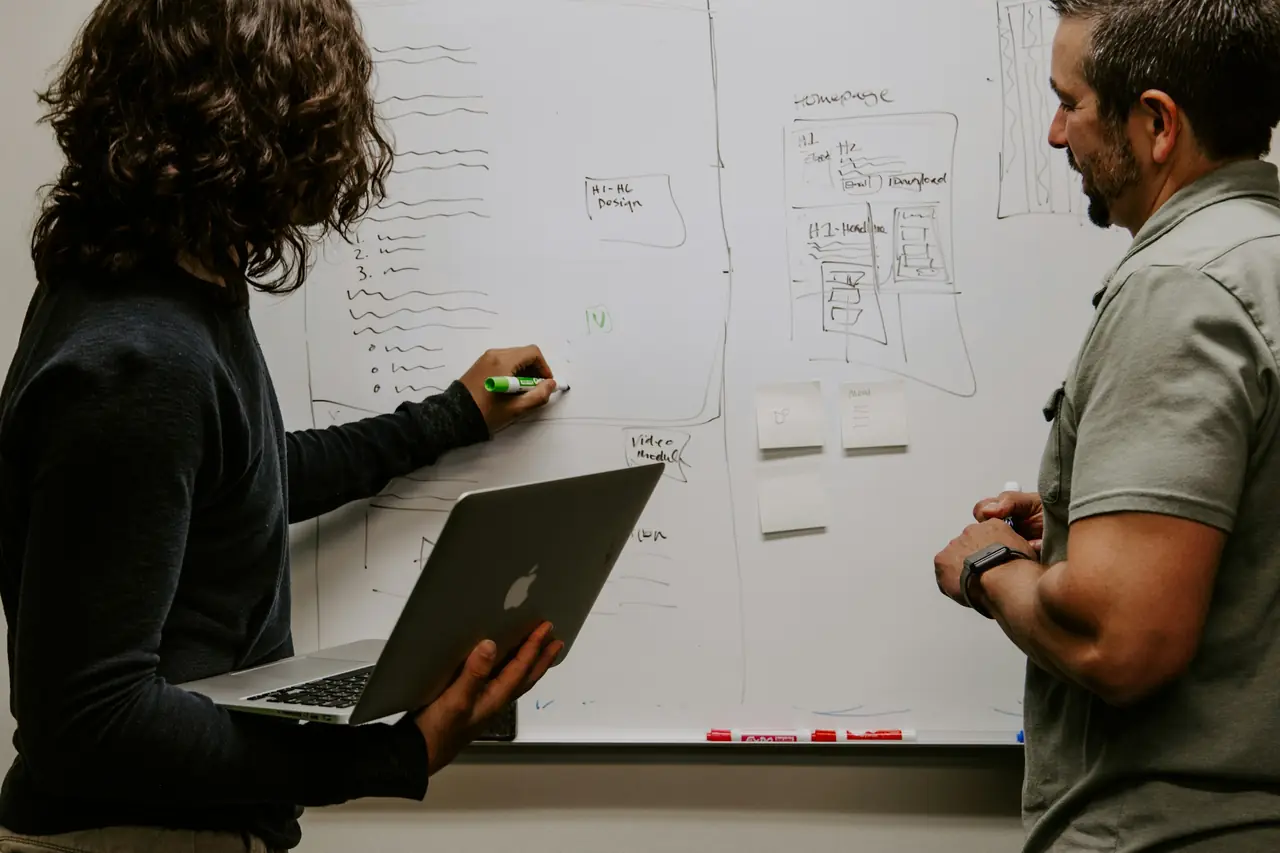
Start with a free 30-minute review.
Databases, cloud or AI: talk to a senior engineer about what you run and what is coming. We reply within one business day and sign your NDA on request.